

This weekend, Create & Cultivate is hosting their annual festival in Los Angeles - what the team has coined “The World’s Largest Festival for Women in Business” - featuring a who’s who of business meets pop culture, from Emma Grede and Alix Earle to Cardi B, Lori Harvey, Jen Atkin, Halle Berry, and the list goes on. Epic.
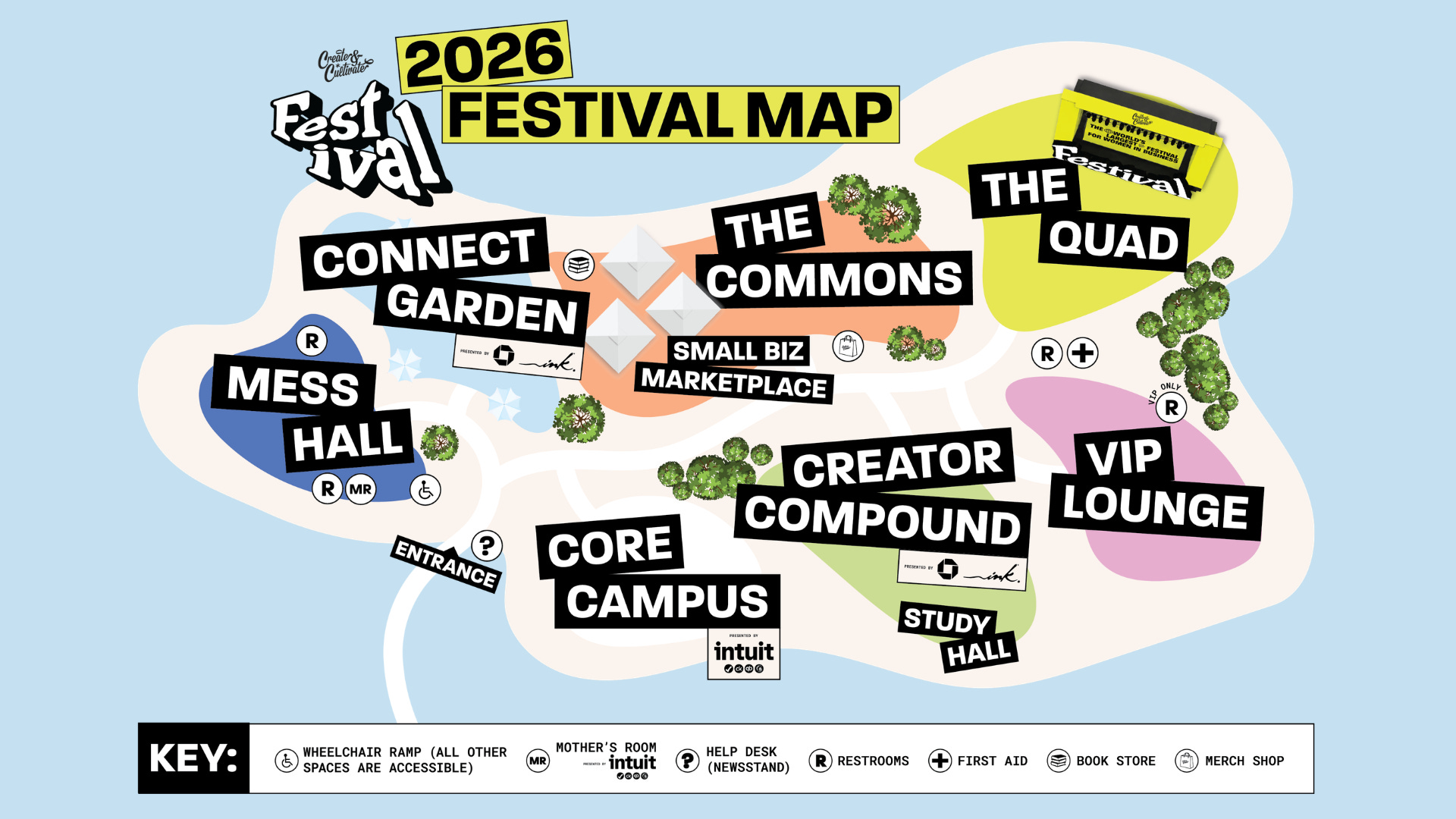
Beyond the incredible roster of talent lined up to speak this year, we were most interested in the positioning of the event itself. Rather than a traditional “conference,” Create & Cultivate has intentionally built this as a festival - and one the team says they approached almost like a “small city.”
With a campus-style format spanning multiple venues, stages, gardens, compounds, and lounges, it feels much more like stepping into a music festival than a traditional “business” event. And that’s exactly the point.
This year, PEOPLE BRANDS AND THINGS is serving as the Official On-Site Content Partner for Create & Cultivate, meaning we’re bringing you inside the festival and sharing real-time footage from sessions throughout the weekend so you can follow along wherever you are - the juicy moments on stage, the educational learnings, and the lessons and advice being shared, all in one place. And, right when it happens, so you can stay up to date on the latest.

Before we get there, though, we had the opportunity to chat with Jaclyn Johnson, Founder of Create & Cultivate, and Marina Middleton, CEO of Create & Cultivate, about the making of this festival as part of this week’s MAKING BRANDS AND THINGS column. Like last week, we thought it would be interesting to look at how something physical like this comes to life - expanding the idea of “making” beyond just physical products and into the world of live events and experiences.
We chatted about their vision for the event, why it has evolved into this festival-like environment, how they think about the different spaces and activations throughout the experience, their talent strategy and areas of focus, new spaces like the Creator Compound this year, and what they think about the future of live events and experiential marketing.
If you’re interested in understanding how Create & Cultivate produces an event of this magnitude - or you work in marketing, talent, or experiential and want to hear from people who live and breathe the industry every single day about where they think it’s headed - this one is for you. Let’s go:
PEOPLE BRANDS AND THINGS: Create & Cultivate has evolved from a conference into a larger festival experience. Talk to us about the decision to create this Festival format. What was the vision behind expanding beyond a traditional “conference” setting?
Jaclyn Johnson & Marina Middleton: Create & Cultivate reinvented what a modern-day conference looks like and now we are taking one step further. We know the real magic happens when people are learning, meeting someone who changes the trajectory of their career, discovering a new brand or walking away with an idea they’re excited to act on.
The Festival format gave us the freedom to create an entire world around the modern working woman. There is still meaningful education, but it exists alongside entertainment, discovery, networking, mentorship, wellness, brand experiences, and moments of pure fun. Someone can hear from a founder they admire, discover a new product, meet a future business partner through CONNECT (our data-driven, AI-powered matchmaking networking program), have an honest conversation in a smaller setting, and end the day at a concert.
The vision was to create something that reflects how ambitious women actually live and work today—where business, creativity, culture and community are completely interconnected.Every part should either teach you something, introduce you to someone, inspire an idea, or make you feel more connected.
PBT: You all attend so many events as founders and people deeply embedded in the brand world. What separates an event that people simply attend from one that people organically share, talk about, and turn into a cultural moment?
JJ and MM: The biggest difference is intention. The best events have a very clear point of view—you immediately understand why this room exists, why these people are in it and why the conversation matters right now.
You also cannot manufacture a cultural moment simply by creating a photo opportunity. People organically share experiences because they felt something: they learned something genuinely useful, met someone unexpected, discovered a brand before everyone else or felt like they were part of a conversation shaping what comes next.
The events that become cultural moments understand the audience at a very specific level. They know what that audience is talking about, what they are struggling with, who they are paying attention to, and what they want access to next. That understanding has to show up everywhere, from the talent and topics to the brands, food, music, design, and small operational details.
There also has to be a sense that something is happening in that room that cannot be fully recreated online. It might be an unexpected conversation, a first announcement, an honest answer from someone people admire, or meeting the person who changes the trajectory of your business. When people feel like they witnessed something meaningful, they naturally want to talk about it.
The goal is not to force people to post. The goal is to create something so thoughtful, relevant, and visually compelling that sharing becomes part of the experience.
PBT: Create & Cultivate brings together founders, executives, creators, and talent across industries. What was your strategy and approach when building this lineup, and how do you think about creating a mix of voices that will resonate with the audience?
JJ and MM: We build the lineup from the audience backward. We start by asking: What are women navigating right now? What do they want tactical advice on? What conversations are happening privately that should be happening publicly? Then we find the people who have actually lived those experiences and can speak about them honestly.
It’s important to have a mix of aspiration and accessibility. A major name might bring someone into the room, but it’s often the founder, operator or creator sharing the very specific details of how they built something that gives the audience the breakthrough. We want established executives alongside emerging founders, creators alongside investors, and people from different industries and stages of their careers.
We look for a mix of cultural relevance, lived experience, business credibility, and the ability to be genuinely useful on stage. A recognizable name may create excitement, but the conversation still needs to give the audience something they can apply to their own life or work.
We also think carefully about the balance of perspectives. We want established leaders alongside emerging voices, founders alongside executives, and people who have built very different definitions of success. Our audience should be able to see someone who reflects where they are today and someone who expands what they believe is possible for tomorrow.
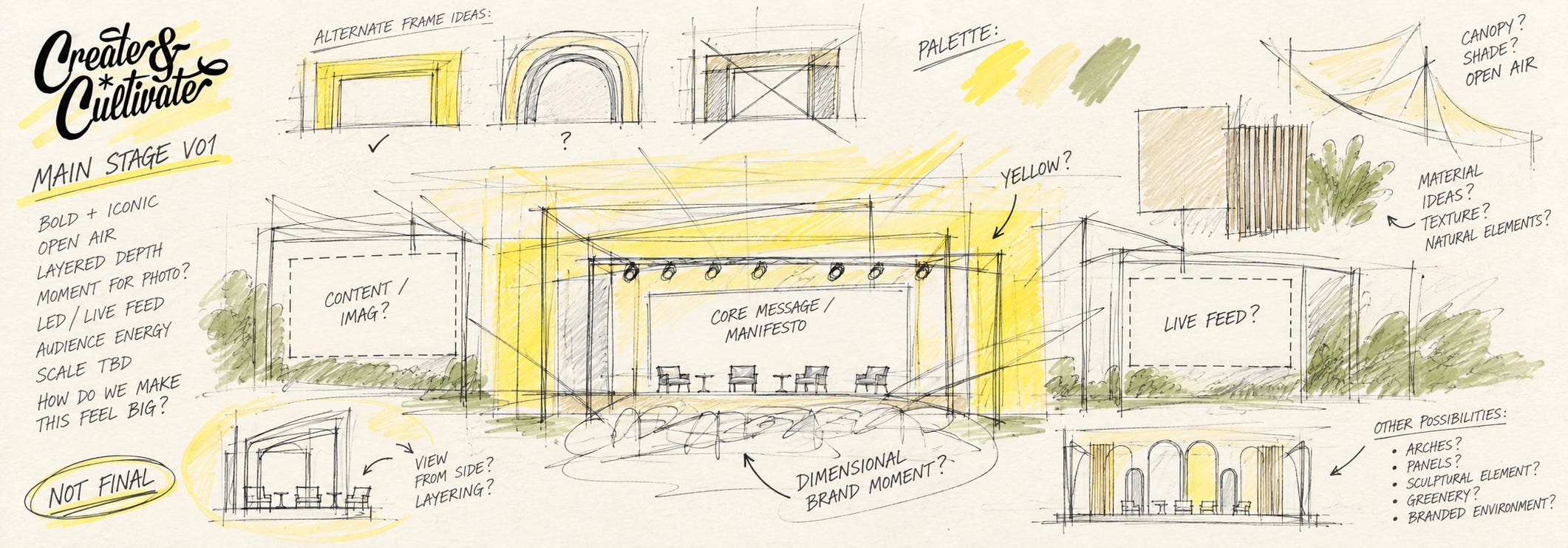
PBT: Beyond the keynote stages and programming, how did you think about the different spaces, activations, and experiential components of the Festival?
JJ and MM: We approached the Festival like a small city. Every space needed a clear purpose, energy, and reason for existing.
Some areas are designed for big collective moments. Others are intentionally smaller and more intimate, giving people room to ask honest questions or have conversations they might not have on a main stage. We created spaces for networking, mentorship, content creation, product discovery, wellness, food, beauty, and entertainment because those experiences are all part of how our audience connects.
We also worked closely with our brand partners to move beyond passive sponsorship. The best activations should provide value, solve a problem, introduce attendees to something relevant, or invite them to participate. A logo alone is not an experience. The brand has to contribute something meaningful to the day.
PBT: We’d love to hear more about the Creator Compound. Where did that idea come from, and why was it important to create that space?
JJ and MM: The Creator Compound came from recognizing that creators are no longer simply a marketing channel. They are founders, media companies, creative directors, community builders, and cultural decision-makers. Yet many business events still treat the creator economy as a single panel instead of an entire ecosystem.
We wanted to create a dedicated home for that ecosystem. It is a place where creators can learn how to build sustainable businesses, strengthen their relationship with their audiences, meet brands and other creators, and better understand ownership, monetization, and long-term growth.
It was also important for us to acknowledge how much founders, executives, and creators now overlap. Some of the most interesting businesses are being built at the intersection of those identities. The Creator Compound gives those conversations the space and attention they deserve.
PBT: Community has always been at the center of Create & Cultivate. What have you learned about building a community that people genuinely want to be part of and return to year after year?
JJ and MM: People want to see themselves reflected, feel heard and know that their participation helps shape what comes next.
Trust is also built through consistency. You cannot show up once a year, ask people to buy a ticket and call that community. You have to keep creating value between the big moments—through content, connections, opportunities and conversations that respond to what people genuinely need.
And the community has to evolve with its members. Many women who first came to Create & Cultivate early in their careers are now founders, executives, investors and leaders themselves. Our responsibility is to keep growing with them while still welcoming the next generation in. People return when they feel both recognized for who they have become and excited about who they could become next.
Community is not an audience size. It is the trust people place in you and the relationships they build with one another because you created the conditions for those relationships to happen.
You have to listen closely and evolve with your community. The woman who attended Create & Cultivate ten years ago may now be leading a company, raising capital, managing a team, or entering an entirely new chapter. If we continue speaking to her as though she has not grown, we lose her.
We have also learned that inspiration may bring someone through the door once, but connection and tangible value bring them back. People return because they met someone, learned something, found an opportunity, or felt understood. The most powerful sign of community is when people stop describing it as an event they attend and start describing it as something they belong to.
PBT: Experiential marketing has become a major focus for brands looking to create deeper consumer relationships. From your perspective, what are the best experiential campaigns doing differently today?
JJ and MM: The strongest campaigns begin with the consumer rather than the brand’s internal talking points. They ask, “What would be valuable, memorable, or genuinely enjoyable for this person?” before asking, “How prominently can we display the logo?”
Great experiential marketing is participatory, culturally aware, and easy to understand. People should immediately know why they want to engage. The experience should also make sense for that specific brand. If any company could replace the logo and the activation would remain unchanged, the concept probably is not strong enough.
The best campaigns are also thinking beyond the footprint. They consider the experience before, during, and after the event, including how it lives through creators, social content, customer relationships, data, and future community touchpoints. An activation should not disappear the moment the event ends.
PBT: What is something you know now about events, partnerships, and building experiences that you wish you knew when you started?
JJ and MM: A few things:
First, the guest experience is often won or lost through operations. Entry, signage, shade, bathrooms, seating, sound, food, water, and clear communication may not be the glamorous parts of an event, but people remember when they do not work.
Second, every partnership needs clearly defined responsibilities, timelines, approval processes, and costs. Never rely on assumptions about who is handling what. Put it in writing, revisit it frequently, and establish one decision-maker on each side.
Third, protect the integrity of the overall experience. It can be tempting to say yes to every idea, sponsor request, or programming opportunity, especially when you are growing. But more is not always better. Every additional element creates operational weight and competes for the attendee’s attention.
Finally, build backward from the feeling you want people to leave with. Programming, talent, brand partnerships, creative, and production are all tools. The experience is the product.
PBT: Looking ahead, how do you see the future of live experiences and community building evolving? What do you think the next generation of events will need to do to stay relevant?
JJ and MM: The future will be more personalized, more participatory, and more connected to what happens outside the physical event.
People will still want large collective moments, but they will also expect experiences that feel relevant to their specific goals and stage of life. Technology and AI can help create smarter introductions, more personalized programming, and better ways to maintain relationships after the event. That is a major reason we are investing in CONNECT and in building more intentional one-to-one connections.
At the same time, the more digital our lives become, the more valuable real human connection will be. The next generation of events cannot simply deliver information because information is available everywhere. They have to create access, belonging, discovery, and relationships that people could not have found on their own.
The event itself will increasingly become one moment within a year-round community rather than the beginning and end of the relationship.
PBT: Any closing thoughts?
JJ and MM: We are proud that Create & Cultivate has grown, but scale alone is not the goal. The goal is to create more meaningful opportunities for women and to be the platform we wish had existed throughout our own careers.
We are also very aware that we are building this as two women who have each experienced entrepreneurship, leadership, reinvention, and ownership differently. That perspective shapes how we think about the next chapter of Create & Cultivate. We want to continue expanding what this company can be while protecting the intimacy, honesty, and sense of possibility that made people connect with it in the first place.