
As a team, we really look forward to Pinterest’s Trend Reports - the annual editions that use data to identify and predict trends for the year ahead, and the topical reports released throughout the year that focus on specific categories or seasons of interest.
These reports are data archives that offer a snapshot of where we are in culture - or where we’re headed - based on what we’re searching on Pinterest. As consumers, it’s fun to read through them and see ourselves in the data - which popular trends did we search for ourselves? But they also allow us to step back and better understand what’s happening beyond our own individual experiences.
For example, you might not personally be a fan of brooches, but Pinterest’s Annual Predicts report from late last year flagged them as a major trend - which helps explain their frequent appearance on red carpets, worn by some of the hottest celebrities, including Michael B. Jordan, Connor Storrie, and Pedro Pascal. Shoutout to Coveteur’s article, “The Men Are Wearing Slutty Little Brooches Again,” which pretty much sums it up. The reports help keep you in the know.
For brands, there are so many use cases, with some using the data points to inform future products - what categories will be popular over the next year - or even their campaigns - what aesthetics are trending and using that to inform say the visual look and feel of creative work over the next couple of years.
This isn’t something Pinterest is passively hoping brands will do on their own - the platform is actively partnering with consumer brands to develop co-branded products. Let’s quickly circle back to our previous article with Pinterest, where their Global Head of Programming and Originals discussed their first-ever co-branded product with Emma Chamberlain’s Chamberlain Coffee. The campaign for this product, and the flavor of the coffee itself, was directly informed by Pinterest’s trend report predicting the rise of the “Fisherman Aesthetic.” That’s powerful.

Beyond shaping products and campaigns, Pinterest’s Reports offer brands a window into where culture is moving and which conversations are defining the moment. That gives brands the opportunity not only to respond to culture, but engage with it in ways that feel timely, relevant, and intentional.
That’s what makes Pinterest’s newest report especially important.
Just today, Pinterest announced the launch of their Summer Trend Report, which we’re most excited about because it’s not just any other report - it’s their first-ever Sports Edition. As Pinterest’s team explained: this summer, sports aren’t just something people are watching, they’re a cultural phenomenon that is influencing everything from fashion, beauty, and beyond.
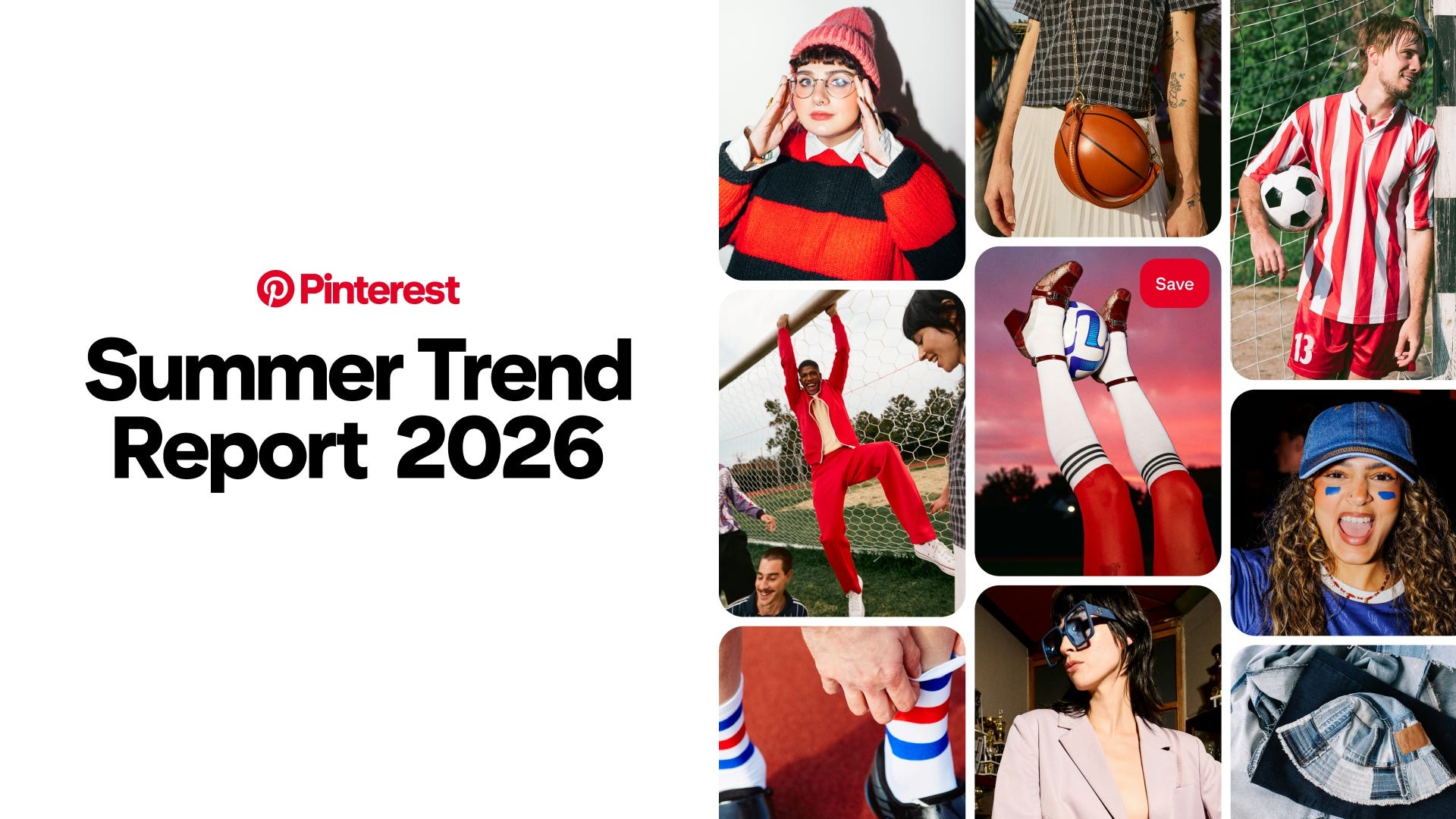
On Pinterest, searches for “World Cup jerseys” are trending +840% and searches for ‘halo hair color’ are up 598%, underscoring the prevalence of this cultural shift. As they shared with us: “As sports move beyond the game into everyday style, wellness, and identity, people are turning to Pinterest to visualize it, save it, and plan what it looks like in their own lives – making these trends show up early and at scale.
Some of the standout trends shared in the report:
Power Players: Defined by people searching for their favorite female athletes’ aesthetics (“Alysa Liu” +39,228%, “Eileen Gu” +5,503%, etc.)
Sports-Luxe Street Style: Searches for that late-’90s/early-2000s sporty dressing look (“baddie tracksuit outfit” +276%, “nylon tracksuit” +158%, etc.)
Off-Duty Varsity: Defined by jerseys, baggy silhouettes, and one-of-a-kind sports fits (“World Cup jerseys” +840%, “Brazil jersey outfit women” +302%, etc.)
Fan Finishing Touches: Fan looks defined by iconic team colors and symbols (“tinsel hair ideas” +622%, “bandana scarf” +424%, etc.)
and so much more.
The report felt very PEOPLE BRANDS AND SPORTS-coded, so we are extremely excited to be EXCLUSIVELY covering launch on PBT. We had the opportunity to speak with Sydney Stanback, the Global Trends and Insights Lead at Pinterest, about the inspiration behind the report, why now felt like the right moment to debut it, and what brands can - and should - take away from it as they shape their work in the year ahead. Even if your brand isn’t inherently a “sports brand” or currently active in the sports space, there’s still something to take away - and a real opportunity to engage in a way that positions your brand within the culture, not outside of it. Let’s go:
PEOPLE BRANDS AND THINGS: Across all of your trend reports, can you walk us through how they’re developed? How do you determine the categories, analyze the data, and identify which trends rise to the top?
Sydney Stanback: Every trend report begins with the data, looking across our 600M monthly active users globally to understand what people are searching for, what is gaining momentum, and where those shifts are happening. But the numbers are only the starting point. The real work is figuring out what is actually behind them, the behaviors or cultural shifts that are driving those searches in the first place. From there, we start to see patterns emerge, clusters of activity that might not seem connected at first, but are actually pointing to the same mindset or aesthetic once you connect the dots.


PBT: Why was this the right moment to launch a sports edition? How does it tie into Pinterest’s broader investment in sports, including partnerships like the NY Liberty?
SS: The data made the decision for us. We were seeing search signals that were too consistent and too significant to fold into a general trend report. Sports had become its own cultural language on Pinterest, showing up across fashion, beauty, food, lifestyle all at once. That kind of cross-category momentum is a clear signal that something has shifted in how people are engaging with the topic.
PBT: What do you see as the biggest drivers behind the categories and trends highlighted in this report?
SS: What stands out in this report is how much the women behind sports are driving a major shift. What we’re seeing now is athletes like Alysa Liu, Eileen Gu, and Natasha Cloud stepping into the role of cultural architects in their own right. Their off-court and off-field aesthetics are actively shaping search behavior in a way that rivals what we would typically associate with major celebrity moments.
PBT: How do popular sports-focused TV shows and content franchises - like Heated Rivalry or Off Campus - contribute to the growth of these trends?
SS: Sports content is a huge accelerant because it brings people into the world of sports who aren’t necessarily watching the games. Someone might not follow the WNBA but they watched a documentary about the players and now they’re searching the outfits, the beauty looks, the whole vibe. Pinterest is usually where that lands — people come to us to figure out how to translate what they just saw into their own life.
PBT: We talk a lot about fandom on PBT. What do you mean when you say, “Fandom is becoming a global lifestyle signal”?
SS: What we mean is that fandom used to be expressed in pretty contained ways, like wearing your team’s jersey to a game or watching a game with friends and family. What our data is showing now is that it has become much more integrated into everyday life, showing up in how people dress on a Tuesday, what they serve at a dinner party, or how they style their hair.
PBT: In our last conversation with Pinterest, we discussed how brands are using trend reports to inform product development and even create co-branded products. How do you see brands leveraging insights from the Sports Edition specifically, and how might that differ from how they use Pinterest’s broader trend reports?
SS: What makes the Sports Edition different is that it comes with a built-in timeline. Sports already has a natural event calendar, from the World Cup to the WNBA season and other cultural moments, which gives brands clear points of entry and something concrete to plan around. That makes the insights feel more immediately actionable than broader lifestyle trends.
It also gives non-sports brands permission to step into the space. A beauty or food brand might not automatically see themselves in a sports conversation, but the data shows their customer is already there, whether that is searching “sweatproof makeup” up 180% or making a watchparty charcuterie spread. The signal is already there, the data just makes it immediately actionable.
PBT: What were the most surprising or unexpected findings from this report, and why did they stand out to you?
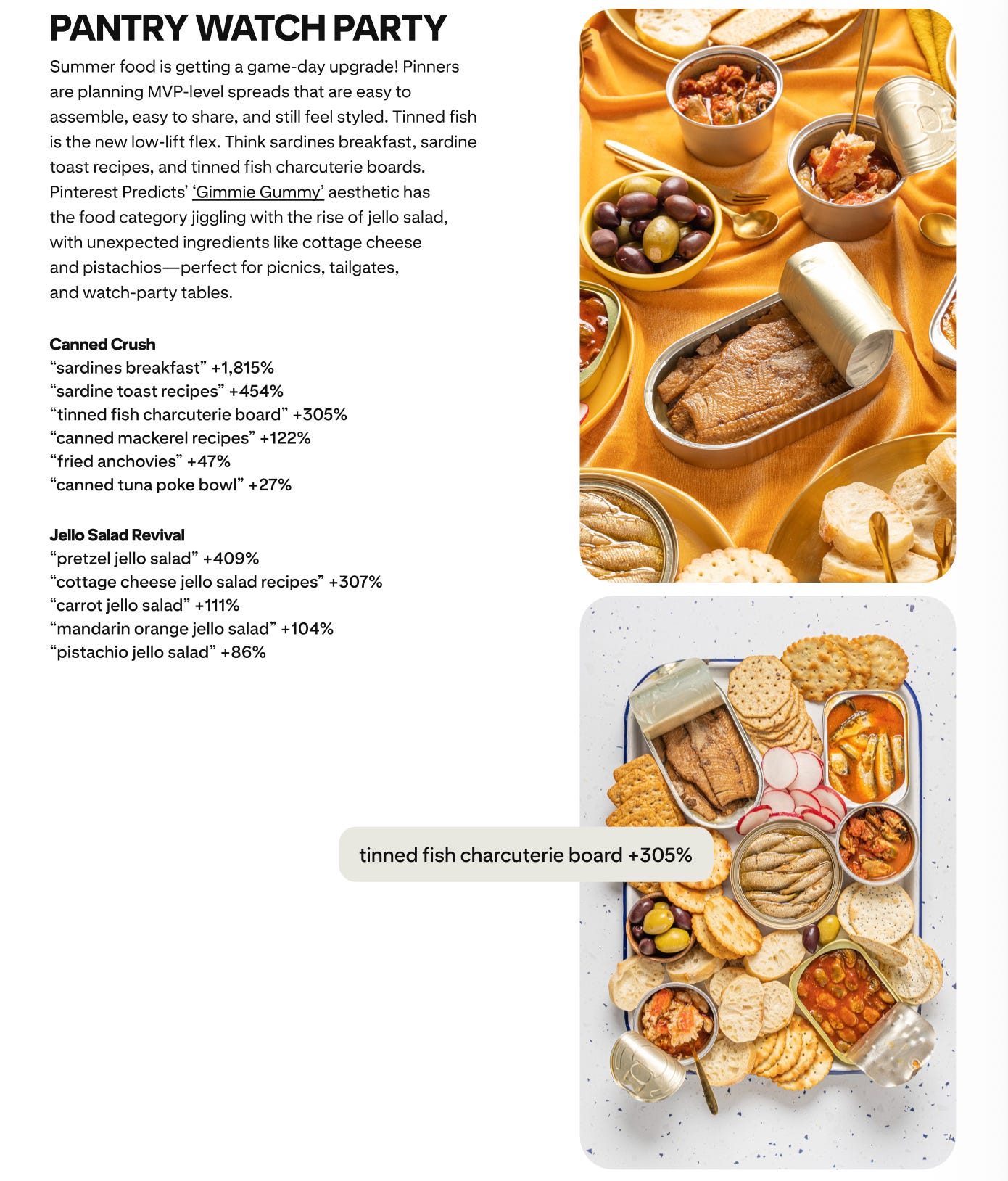
SS: The food data genuinely surprised me. Sardines breakfast up +1,815% is not a number you expect to see in a sports trend report, but when you zoom out, it tells you everything about how watch-party culture has evolved. It’s not chips and dip anymore, people are building spreads that belong on a Pinterest board, something that feels curated and personal, not just convenient.
We love a Pinterest report over here 🥰 It’s been so interesting to see bloquette core go from a micro trend to everyone leaning into a sporty spice mini me over the past 2 years.
I love Pinterest Predicts and their mid-year reports, this was great!